
Video Library
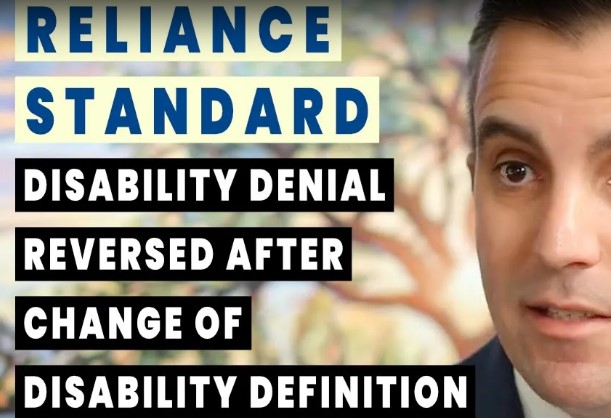
This video discusses a recently resolved disability case against Reliance Standard.
The case involves a respiratory therapist employed by MedStar Health for 17 years, who enjoyed a respected career until multiple physical ailments forced him to stop working. He suffered from a range of conditions, including knee issues, back problems, carpal tunnel syndrome, hip issues, shoulder problems, and prior lumbar and cervical spine fusions, with pending knee replacements and hip surgeries. These conditions severely limited his physical capabilities, leading him to file a long-term disability claim with Reliance Standard in early 2022. Reliance Standard approved the claim and paid benefits for nearly two years.
As the two-year mark approached in 2024, when the policy’s definition of disability typically changes (e.g., from own occupation to any occupation) or mental health limitations may apply, Reliance Standard sent the client for an Independent Medical Examination (IME). The client, anticipating a potential denial due to an unsatisfactory IME experience with a doctor who spent minimal time with him, contacted attorney Alexander Palamara in May 2024, before the denial was issued. Palamara advised him to obtain updated medical records and a Functional Capacity Evaluation (FCE), which the client independently arranged. The FCE concluded he was incapable of even sedentary work due to his extensive physical limitations. Despite this, Reliance Standard denied the claim in May 2024, though they continued payments through August, providing three months of income during the appeal process.
Palamara, hired after the denial, prepared an appeal within the 180-day window. The appeal leveraged existing medical evidence, including the client’s FCE and updated medical records, supplemented by additional support from the client’s doctors via attending physician statements. Palamara’s key strategy was a detailed analysis of the IME report, which he found riddled with inconsistencies. The IME doctor, who spent only a few minutes with the client, claimed the client could perform fine manipulation and sit all day, despite documented carpal tunnel syndrome and an FCE indicating only occasional sitting and standing capacity. The IME report also trivialized the client’s condition by noting he could bend over to put on socks, which Palamara argued was irrelevant to his ability to work full-time.
By highlighting these discrepancies, referencing objective evidence like MRIs and orthopedic examinations spanning years, and reinforcing the client’s Social Security disability approval, Palamara crafted a compelling appeal. Reliance Standard overturned the denial within approximately 45 days, without taking the additional 45-day extension they are permitted. The appeals department acknowledged the errors in the initial denial, reinstating the client’s benefits, though he endured two months without payments. The attorneys noted that Reliance Standard’s reliance on a flawed IME, conducted before the denial, posed a challenge, as insurers often view such exams as unbiased and contemporaneous. However, Palamara’s thorough appeal, emphasizing inconsistencies and robust medical evidence, successfully convinced Reliance Standard to reverse their decision, demonstrating that well-prepared appeals can overcome even difficult denials in ERISA-governed claims.